The Evolution of Cloud Onboarding
Since its inception, AWS has been synonymous with immense depth and architectural flexibility. Services such as Amazon Simple Storage Service (S3), Elastic Compute Cloud (EC2), and Simple Queue Service (SQS) formed the foundational backbone of the modern internet. However, as the platform grew to support massive global enterprises and government entities, the complexity of configuring security, networking, and governance increased. For a solo developer or a small startup, the sheer volume of options—IAM roles, VPC subnets, and granular permissions—often represented a "configuration tax" that slowed down the innovation process.
The new initiative represents a strategic shift in how AWS handles the "day zero" experience. By defaulting to sensible configurations and abstracting away the underlying infrastructure management, AWS is attempting to lower the cognitive load for builders. This move aligns with the broader industry trend of "serverless-first" development, where the developer’s focus is shifted entirely to the application code rather than the orchestration of the underlying hardware or service permissions.
A Chronology of AWS Accessibility
To understand the significance of this update, one must look at the timeline of AWS’s interface evolution:

- 2006–2010 (The Infrastructure Era): AWS focused on providing raw building blocks. Access was purely programmatic or via a rudimentary management console.
- 2011–2018 (The Expansion Era): As the platform added hundreds of services, the focus shifted to enterprise requirements. This era saw the introduction of complex Identity and Access Management (IAM) systems and intricate governance tools like AWS Organizations, which were powerful but daunting for beginners.
- 2019–2024 (The Abstraction Era): With the rise of managed services like AWS Lambda and Fargate, AWS began focusing on reducing the "undifferentiated heavy lifting."
- 2025–Present (The AI-Agentic Era): The latest shift acknowledges that modern developers are increasingly using AI coding agents (such as Claude, GitHub Copilot, or Cursor) to write their infrastructure-as-code. The new project-based experience is designed to be "agent-native," providing developers with prompts that allow these tools to interact directly with the AWS environment without requiring the user to manually configure complex networking or security policies.
Core Features of the Simplified Experience
The new onboarding architecture is built around three pillars: identity, automation, and financial guardrails.
Identity-First Onboarding
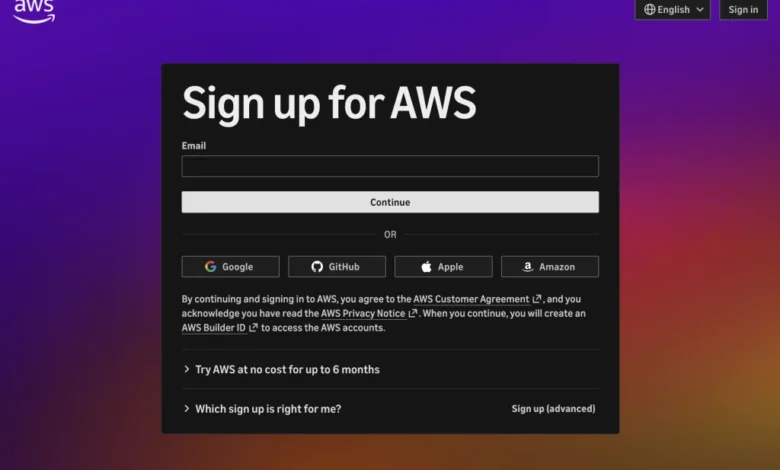
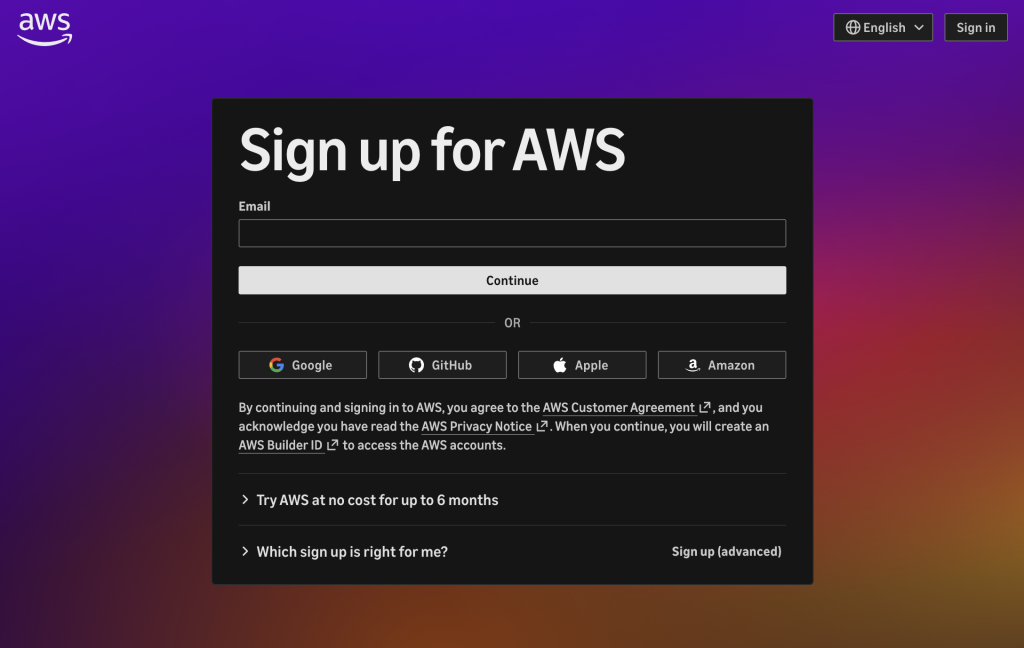
New users can now authenticate using existing identity providers—including Google, GitHub, and Apple—bypassing the need to create traditional, password-heavy AWS accounts. This integration leverages OAuth standards to provide a seamless transition from a developer’s coding environment to their cloud infrastructure. Furthermore, collaboration is handled through email invitations, which automatically manage permissions at the project level, eliminating the need for users to manually configure IAM policies or manage complex user groups.
AI-Agent Integration
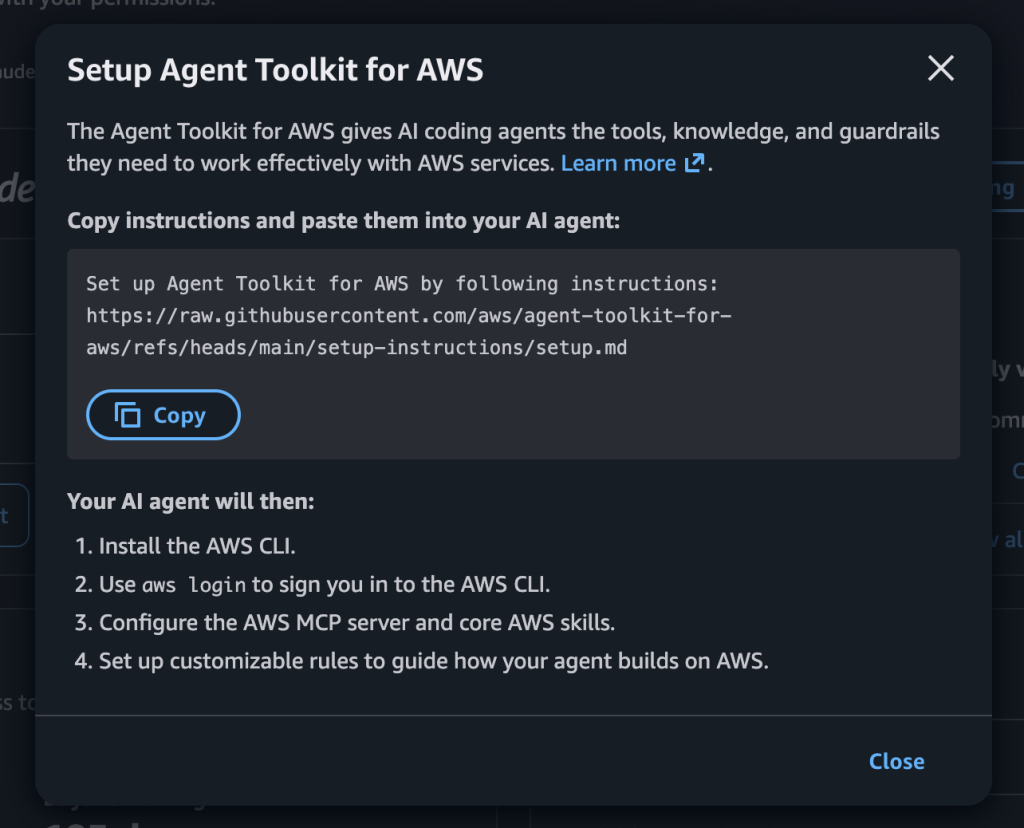
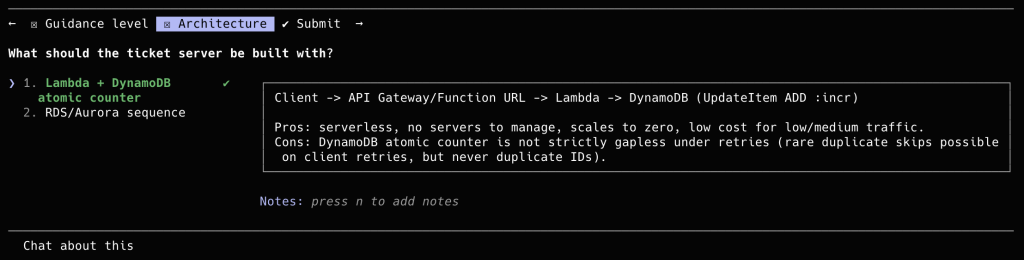
Perhaps the most notable departure from legacy workflows is the integration of "Agent Toolkits." Upon account creation, the platform provides a specific configuration prompt that can be pasted into a coding agent. Once configured, this agent can autonomously deploy resources, manage permissions between services, and iterate on code. In a practical test, an agent was able to deploy a complete serverless architecture—comprising a Lambda function, a DynamoDB table, and an API Gateway—in minutes, with all necessary permissions handled automatically by the platform.
Financial Guardrails
Budget management is a critical pain point for new developers. The new experience introduces a project-level spend limit. By setting a hard ceiling (starting at $20/month), users can ensure that their experimental projects do not incur unexpected costs. If a project reaches its budget limit, AWS pauses the resources rather than continuing to bill the user. This "fail-safe" mechanism provides developers with the security needed to experiment without the fear of large, unplanned invoices.
Supporting Data and Market Context
The market for cloud development tools is highly competitive. According to recent industry analysis, the primary friction point for developers moving from local environments to the cloud is "environment drift" and "configuration complexity." A survey of cloud developers conducted in mid-2025 indicated that nearly 40% of developers cited "IAM configuration" and "security policy troubleshooting" as the top reasons for abandoning cloud service setups in favor of local or PaaS alternatives.
By automating these processes, AWS is directly targeting the "Time-to-First-Deployment" (TTFD) metric. The inclusion of $100 in free credits—accessible without a credit card in many regions—is a strategic move to capture the early-stage developer market. Data from similar initiatives suggests that lowering the barrier to entry significantly increases the long-term lifetime value (LTV) of customers, as they are more likely to scale their infrastructure on the same platform where they built their initial prototype.

Implications for the Cloud Ecosystem
The decision to transition to a project-based model has several profound implications for the industry:
- The Rise of Agentic Cloud Ops: By providing a structured way for AI agents to interact with the console, AWS is signaling that the future of cloud management is not in the manual click-and-configure interface, but in machine-to-machine interaction. This move will likely force competitors to standardize their own API structures for AI agents.
- Increased Developer Velocity: Small teams and individual builders can now deploy production-ready serverless architectures that follow AWS best practices out of the box. This effectively democratizes access to enterprise-grade infrastructure.
- Migration Paths for Growth: Crucially, this simplified experience is not a "sandbox" that must be abandoned. As a project matures and requires more advanced features—such as multi-Region support, complex VPC networking, or sophisticated governance—users can upgrade to the full AWS feature set without needing to migrate their data or change their architecture. This seamless transition is intended to retain users who might otherwise migrate to smaller, more specialized cloud providers during their initial growth phase.
Official Stance and Future Outlook
While AWS has not released a formal public statement on the specific engineering challenges of this rollout, internal leadership has framed the move as a return to the company’s roots. "We started as a place where anyone with an idea could start building," a company spokesperson noted during the announcement. "Our goal is to ensure that the complexity we built to support the world’s largest enterprises does not become a barrier to the next generation of innovators."
The rollout is currently being implemented in phases for new customers. The company has invited the developer community to provide feedback, with a particular focus on how well the AI agent integrations perform across different coding environments.
As the industry moves toward an era where infrastructure is increasingly invisible, the success of this initiative will be measured by the adoption rate among early-stage developers and the subsequent migration of those projects to larger-scale enterprise tiers. By bridging the gap between "no-code" ease-of-use and "full-code" power, AWS is positioning itself to remain the primary destination for builders, regardless of the size or complexity of their initial ambitions. The integration of spend limits and identity management further reinforces the platform’s commitment to safety, ensuring that the cloud remains a space for experimentation, even in an increasingly automated and AI-centric development landscape.
Related posts: